
Welcome to Startup Pirate, Year 7. I hit send on the first post, a little over six years ago, to tell the stories of Greeks in tech building cool things and pushing frontiers. It feels surreal that we’re now at edition #133.
We’ve had guests working on foundation models, humanoids, space rockets, new drugs, and nuclear fusion. Founders who raised billions, scaled to millions of users, sold their businesses, pivoted, or stayed bootstrapped.
Thank you to everyone who’s been part of it until now. I hope this has helped even a few of you connect the dots and go pursue your craziest, most ambitious ideas.
If you’re not a subscriber, click below to get the next posts in your inbox:
On April 1, 2026, Artemis II launched from Kennedy Space Centre, carrying four astronauts aboard its crew spacecraft Orion on humanity’s first crewed lunar flyby in more than fifty years. Over roughly ten days, the crew tested Orion’s systems in deep space, travelled farther from Earth than any humans have ever gone, swung around the Moon, observed its near and far sides, and splashed down in the Pacific on April 10.
Artemis II brought back a storyline that had been dormant for more than half a century: humanity is back in lunar space. We didn’t land on the Moon, as that was never the mission. But the Moon has re-entered the centre of politics, national strategy, and long-range industrial planning. This time, the story isn’t just about getting back to the Moon. It’s about what happens once we do.
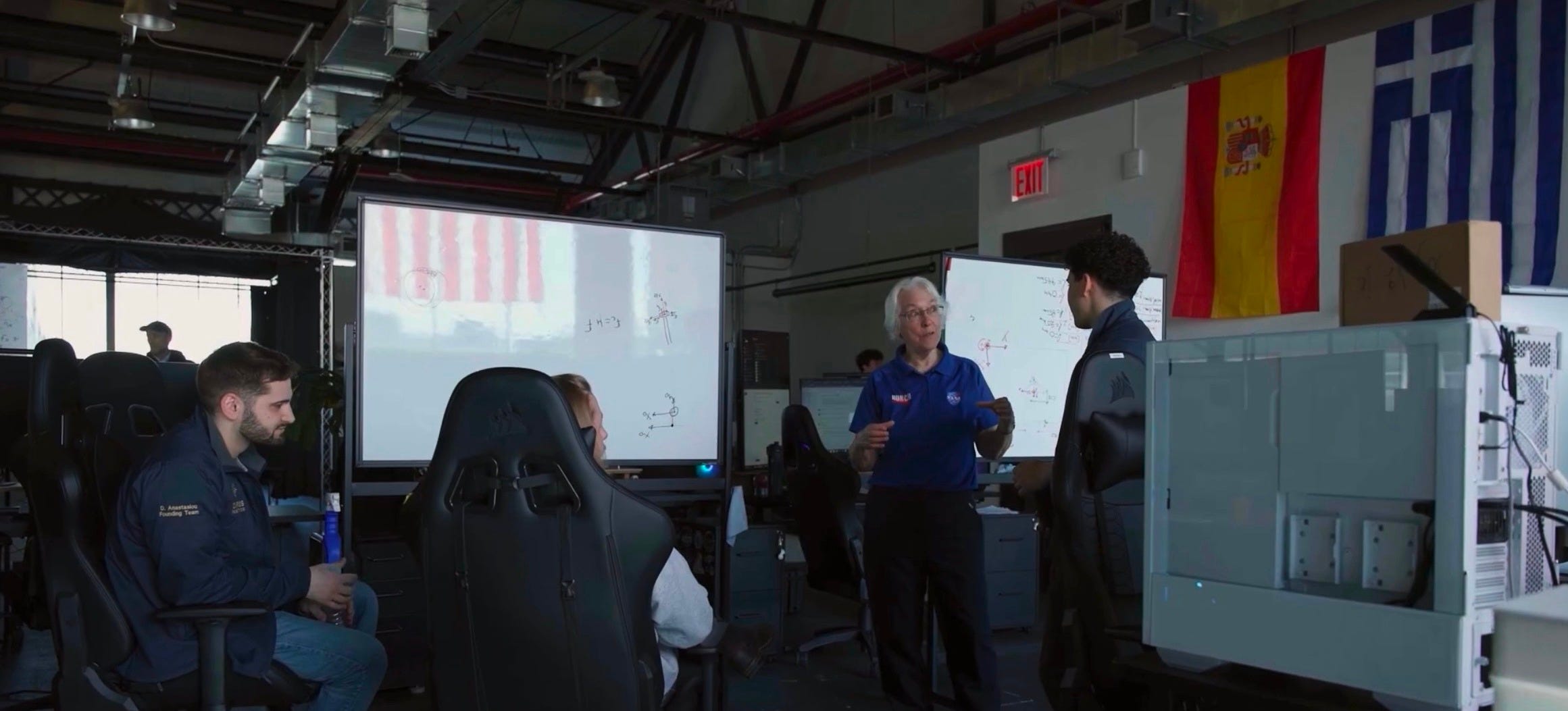
That is the harder part to understand. Over the past few weeks, Dimitris Anastasiou and I have been talking through what Artemis II really changed, why the Moon is suddenly urgent again, and why the next chapter of space may depend less on rockets than on robots. Dimitris is a Founding Engineer at Icarus Robotics, where he’s building robotic labour systems for space. He thinks about the Moon less as a destination than as a workplace under construction. This essay is our attempt to make sense of what that means.
Let’s get to it.
Who Will Build The Moon?
A co-written essay with Dimitris Anastasiou
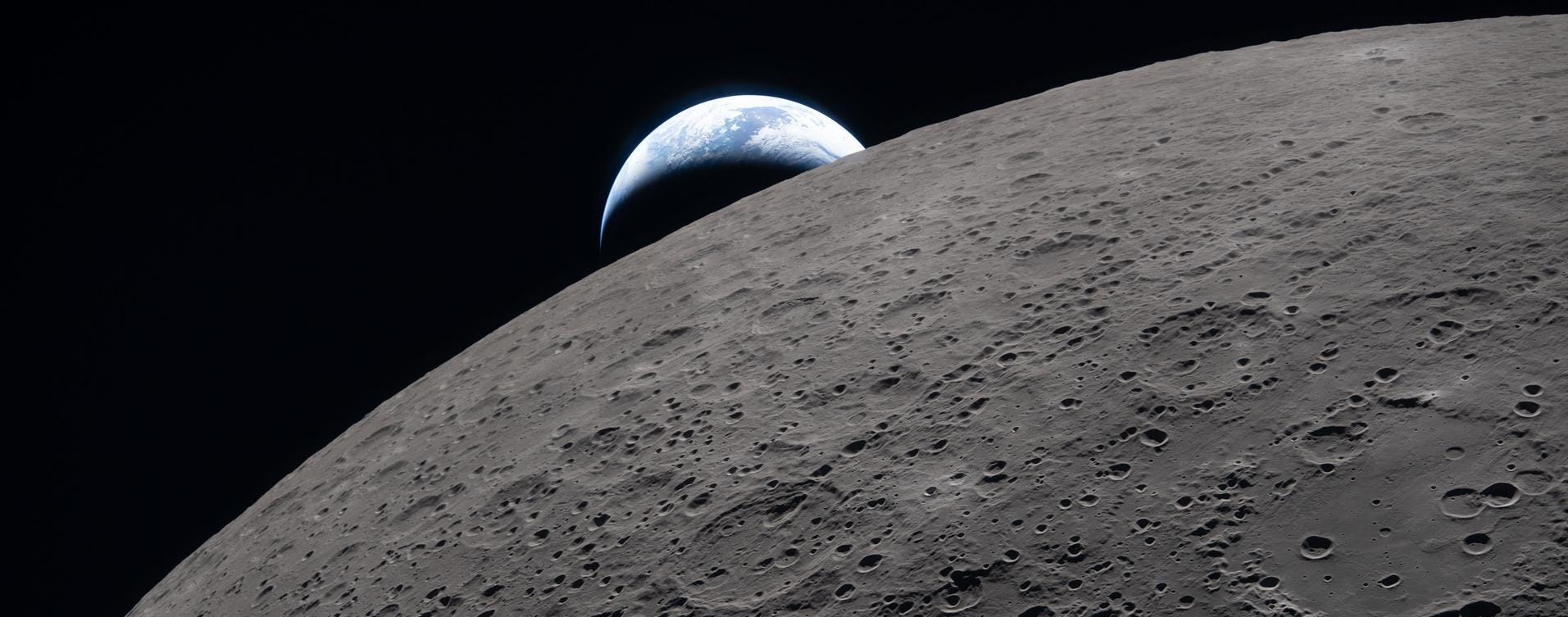
Artemis II put the Moon back in motion
For more than half a century, the Moon belonged mostly to history. Apollo 17 left the lunar surface in December 1972, and no human being returned. The Moon remained culturally powerful, technologically relevant, and strategically tempting, but dormant as a real theatre of human action. Artemis II changed that, not because it completed humanity’s return, but because it proved that “return” is now a live campaign.
That campaign is easy to misunderstand if we see it through the lens of Apollo nostalgia. The reason the Moon faded after Apollo was that the US had already won the original space race. Once that symbolic victory was secured, the political incentive weakened, budgets tightened, and lunar missions ceased to be a national priority.
This also helps explain why the Moon is back now. The United States is approaching this moment as a strategic priority. At this year’s Space Symposium, the NASA administration made clear that the US needs to win the space race against China. Whether you take that as rhetoric, doctrine, or both, the point is that the space race is back because the incentive structure is back. Meanwhile, the sense is that China is moving faster than many expected, even if much of its progress remains opaque.
The ecosystem is very different now from what it was in the 1960s. NASA is no longer the only meaningful actor. SpaceX, Blue Origin, Voyager, and a wider class of commercial companies now shape the field too. The space industry is commercialising, but the initial push remains political.
Which means we should read missions like Artemis II (which was designed to validate systems, procedures, manual operations, life support, navigation, and the broader machinery of sending humans into deep space), less as a lunar spectacle than a systems check on a geopolitical ambition.
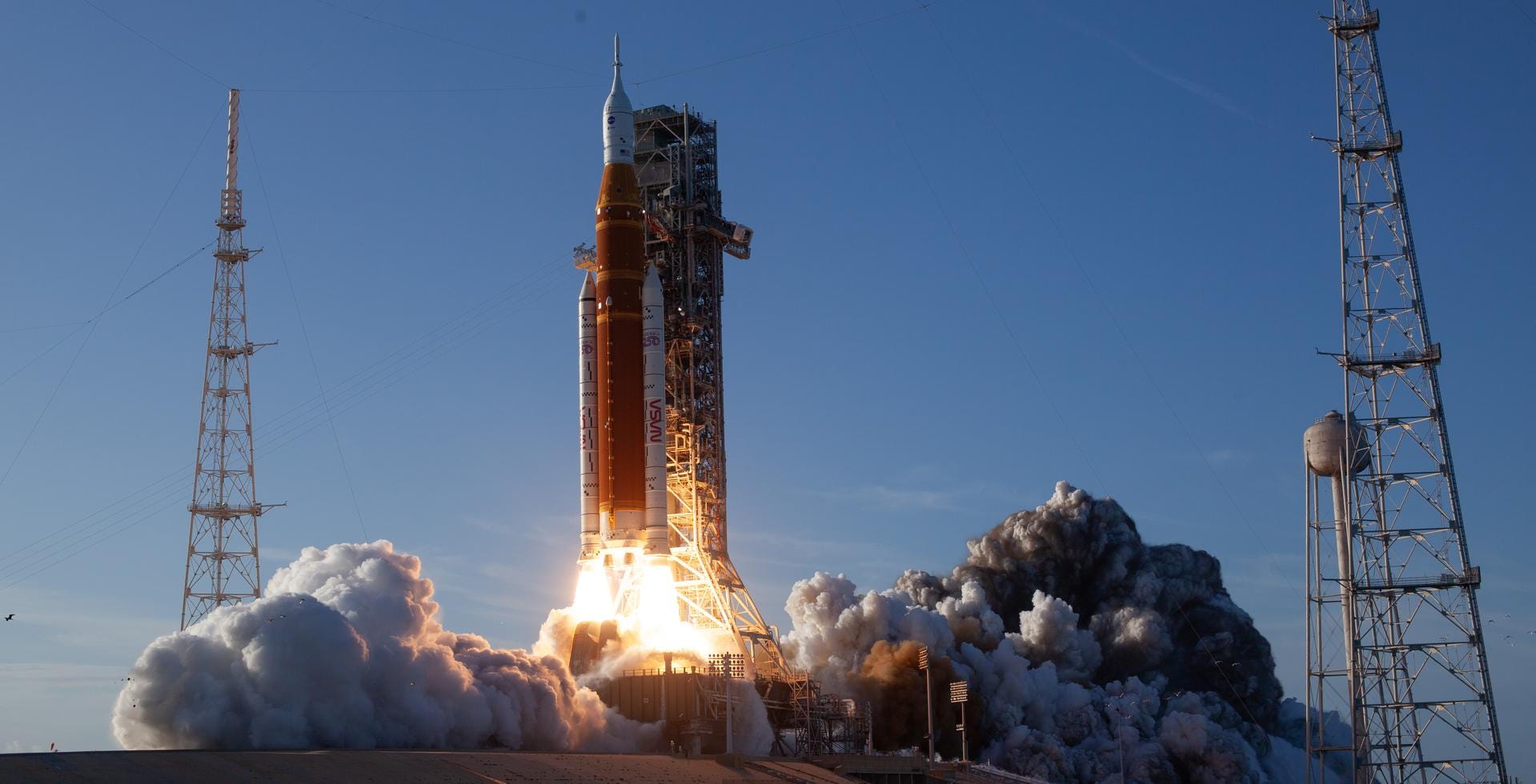
And yet, even at this stage, we should be sceptical of the more inflated visions. People like to imagine lunar cities, giant domes, and self-sustaining bases. The first wave of real lunar infrastructure will look nothing like that. It will be smaller, rougher, and far more dependent on Earth for logistics, resupply, navigation, and maintenance. It will look more like an Antarctic research outpost than a science-fiction metropolis.
Artemis II forces a harder question: What happens after the mission patches, livestreams, and national statements fade? What, exactly, does it take to build something that lasts?
Rockets get headlines. Labour builds infrastructure.
Space’s real bottleneck is labour. We’re used to talking about space in terms of launch cadence, propulsion, and rocket architecture. Those things matter. But if the ambition is not just to visit space, but to build there, then the question changes to: Who does the work?
If we want functioning stations, orbital logistics, maintenance, inspection, servicing, experimentation, and eventually larger infrastructure around the Moon, we need persistent labour. This is where the usual story about astronauts stops being enough. Astronauts are too few, too expensive, and too unscalable to serve as the foundation for a real space economy. It costs $130,000 per hour to keep an astronaut in orbit. Human spaceflight can push the frontier, but it cannot, on its own, industrialise it.
That’s the opening for robotic labour. If space is going to move from heroic exploration to actual infrastructure, then a meaningful share of the repetitive, operational, and physically costly work has to become robotic.
The labour force for space
This is the problem Icarus Robotics is trying to solve: How to build robotic workers capable of performing real operational work in orbit. We’re starting with a specific kind of machine, a free-flying, dual-arm robot designed for crewed space stations. It can move through the interior of a station, float from task to task, and use two manipulators to perform actual work.
The initial target is station logistics, such as cargo handling, internal maintenance, inspection, and repetitive, low-leverage tasks that need to be done and require astronaut time. We’re starting where the problem is hard enough to matter but not so hard that every variable hits at once, like inside space stations in low Earth orbit with intravehicular applications.
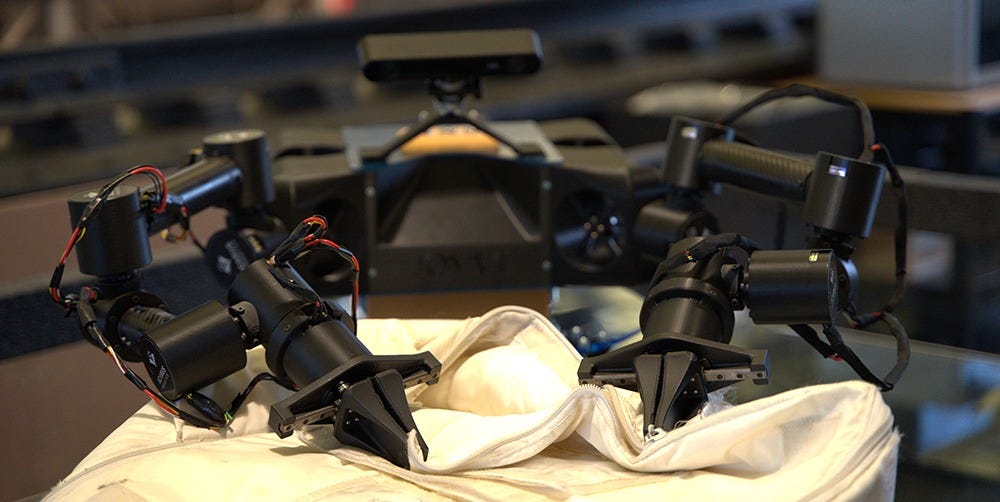
Inside a station, you’re still dealing with microgravity, control complexity, manipulation, and reliability. But you aren’t yet taking on the full stack of external exposure to vacuum, extreme temperatures, and radiation as you would outside of a spacecraft. That lets us focus first on controllability and meaningful work inside the habitat.
The first mission, Joyride 1, is targeted for early 2027 with a test flight on the International Space Station (ISS) in collaboration with Voyager. More specifically, the point is to prove that a free-flying, dual-arm robot can operate inside a crewed station and do useful work there. Not just exist in orbit but work in orbit.
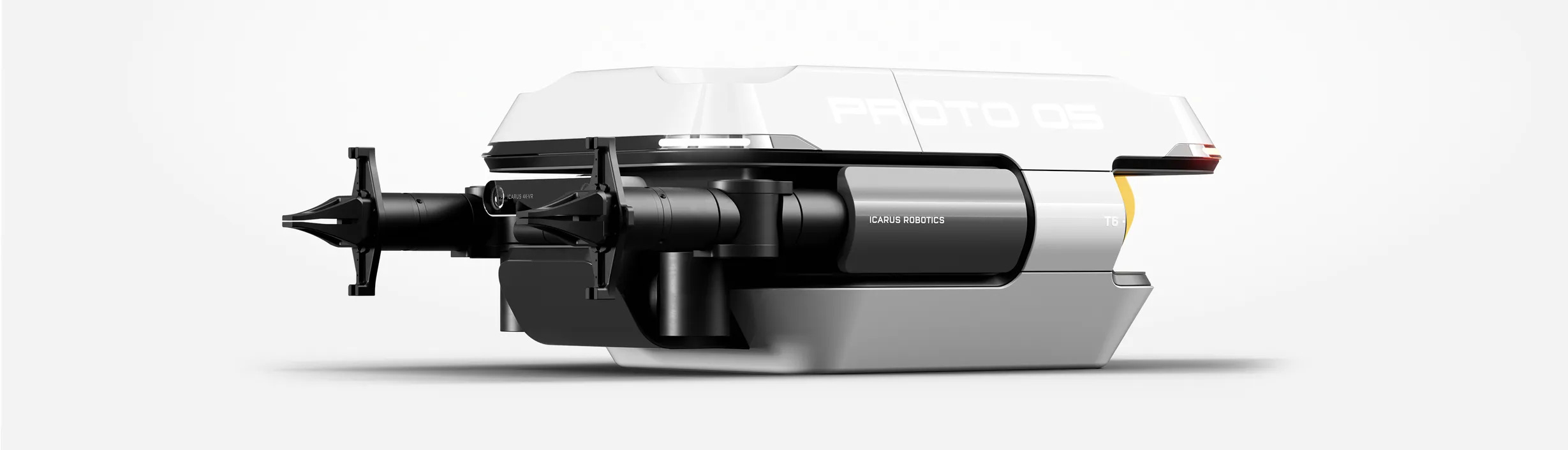
Right now, Icarus’s system is teleoperated by ground operators using dedicated interfaces to fly the vehicle and control its two manipulators. However, the long-term opportunity is autonomy, since it’s the only path to scaling work in space as missions become more complex and continuous.
In the future, every serious space robot will require a software layer capable of managing autonomy, reliability, and environmental adaptation. That’s the layer we want to help define with Icarus Robotics, and our long-term ambition is a software-and-autonomy layer for robotic labour across space infrastructure, from internal station logistics to satellite servicing, refuelling, maintenance, and eventually the systems that support places like future lunar bases.
Why space robotics is harder than it looks
The first challenge of developing robots for space is physical. Microgravity changes control. The coupling dynamics of robotic systems in space differ from those on Earth. Even before you reach extreme external environments, the absence of gravity changes the problem.
The second challenge is operational. On Earth, you can run tests, iterate, debug, and repair. In space, by contrast, the robot must operate in environments where support is sparse, repair is difficult, and failure is costly. That means the standard for reliability is far higher than in most terrestrial robotics environments.
The third challenge is epistemic. You cannot fully recreate the real environment on Earth. You can simulate it, approximate it, test pieces of it through air-bearing setups, neutral buoyancy, and parabolic flights, though none of those perfectly substitutes for the real thing.
So, deployment is such a meaningful threshold. The problem isn’t just getting a robot to function. It’s getting a robot to function reliably, out of the box, in an environment that resists full rehearsal. In space, there’s no clean separation between control, deployment, operations, and reliability. They collapse into each other. And that collapse is exactly why the field has to confront the difference between what can impress in a demo and what can be trusted in infrastructure.
The AI stack is still unsettled
Then, there’s the deeper question: Even if the need for robotic labour is obvious, do we actually know how to build the intelligence stack that will support it? There are three unresolved layers. The first is hardware. Compared with the human body, and especially the human hand, robotic hardware still lags. Tactile sensing, proprioception, and overall physical fidelity remain far from what humans take for granted.
The second is architecture. Robotics doesn’t yet have its transformer moment. There’s no agreed-upon stack that the field has converged on and can now simply scale. Some teams are pushing VLA systems that connect perception and language directly to action. Others argue that robots need world models, an internal model of the environment that lets them reason before they move. Others are trying to bring the broader foundation-model paradigm into robotics, betting that scale itself will unlock capability. Maybe one of those camps is right, or maybe the answer is a hybrid.
The third, and in some ways the most underappreciated, is data. A large share of embodied AI today learns from human demonstrations. That sounds sensible, until you ask a more uncomfortable question: What exactly is being transferred from the human to the robot? If you train too directly on human motion, you may also transfer the limit of human capabilities. The robot may end up imitating a body it lacks, inheriting constraints it doesn’t need, and copying strategies that are natural for humans but suboptimal for machines.
As a result, we keep coming back to intent. The real task is not to teach a robot to reproduce a human movement exactly, but rather to teach it what the movement is trying to accomplish. Grasp this object safely. Manipulate this tool efficiently. Complete this task under these constraints. The solution should then adapt to the robot’s own embodiment.
What defines the next era of space infrastructure
If we’re right, then the next era of space infrastructure won’t be defined only by rockets, launches, or even lunar missions in the narrow sense. It will be defined by whether space can become operationally persistent.
That means labour. It means maintenance, logistics, servicing, and the accumulation of enough reliable work to turn presence into infrastructure and infrastructure into industry. Hence, this moment feels more important than a simple return-to-the-Moon story. Artemis II signals that the Moon is once again politically live. The US-China rivalry explains why the urgency is back. But neither of those facts tells us whether space becomes durable.
That question will be answered somewhere lower in the stack. It will be answered by whether robotic systems can do useful work in space, whether they can do it reliably, whether the intelligence layer behind them becomes good enough to scale, and whether companies like Icarus Robotics can help turn robots from experimental payloads into actual labour foundation.
The first Space Race was written in launches and landings. The next may be written in tools, maintenance, and labour.
Top News
DevTools and Cyber meetup powered by Marathon x Microsoft
We’re gathering tech founders, executives, and investors to deep-dive into developer tools and cybersecurity on May 28th in Athens for a special Panathēnea side event. Register here.
Matternet launching NHS drone delivery in Central London
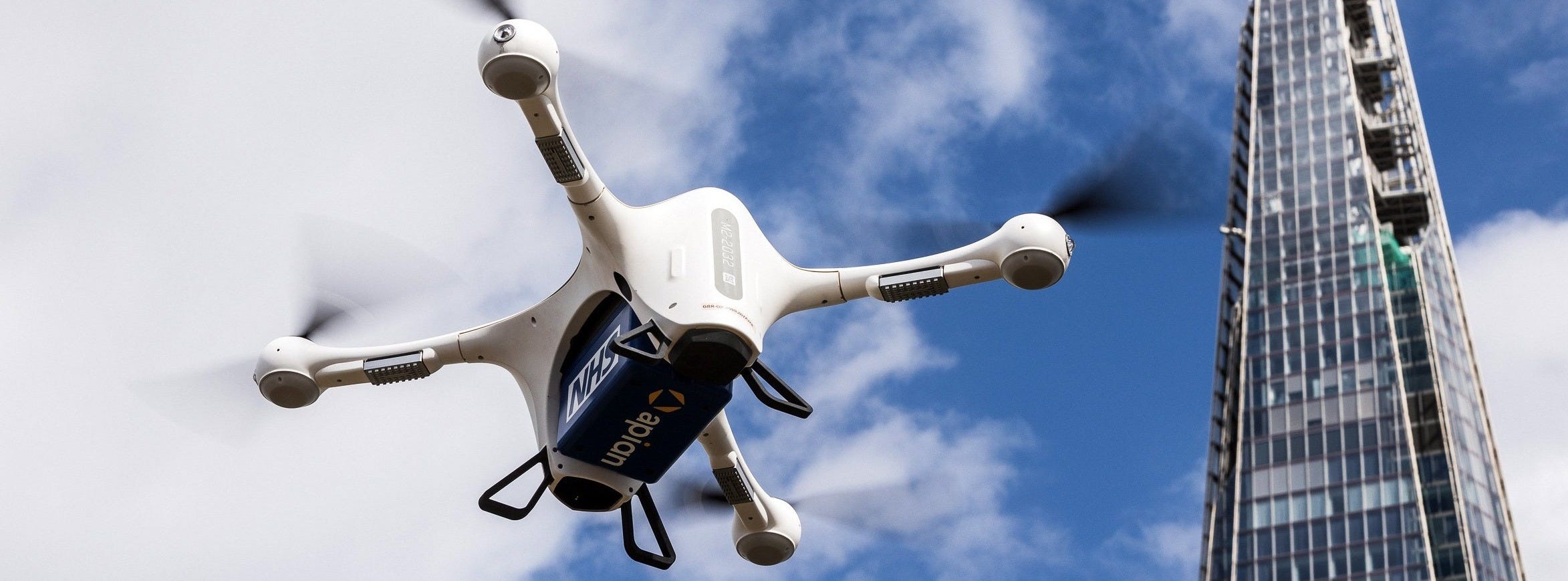
Urban drone delivery company Matternet started drone delivery operations in Central London for the UK’s National Health Service (NHS). It now connects two of Central London’s busiest hospitals through aerial routes designed to move critical medical items (diagnostic samples, lab specimens, pharmaceuticals, and other time-sensitive payloads) in minutes.
A robot can beat elite players at table tennis
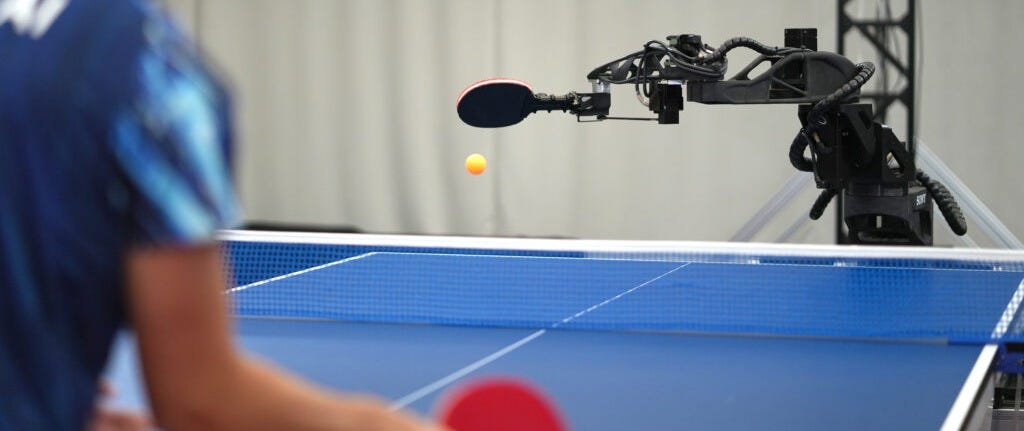
Stefanos Charalambous (Georgia Tech, ETH Zurich) and Agis Politis (NTUA, ETH Zurich) were part of Sony’s team that built Ace, an autonomous table tennis robot player that can compete against, and sometimes defeat, elite human players in real matches. This is a brutal test for physical AI and the first robot to attain expert-level performance in a competitive physical sport. Read the article in Nature here.
Door to Silicon Valley for young Greeks
Philoxenia is a two-week Silicon Valley experience for young Greeks who are coding and building projects. Created by Hustle Hours, it opens the door to San Francisco’s startup ecosystem through founder access, campus visits, co-working, mentorship, and exposure to how ambitious companies are built. Apply here.
Jobs
Check out hundreds of job openings here from startups hiring in Greece.
Fundings
AI platform for MedTech, AcuityMD, announced an $80M Series C led by StepStone Group, with participation from Benchmark, Redpoint Ventures, ICONIQ, and more.
Fusion energy company First Light Fusion secured £25M with backing from the UK Atomic Energy Authority. Read my conversation with Yiannis Ventikos here.
Proptech company Moving Doors, which offers fully furnished apartments for mid- to long-term stays, raised €6M Series A led by Golden Age Capital.
Dex landed a $5.3M Seed Round led by Notion Capital to grow its AI-driven talent-matching platform.
Tydra Labs raised $1.2M in Pre-Seed funding led by Spring Impact Capital to turn waste into biomaterials.
Acquisitions
American Express (NYSE: AXP) acquired the agentic expense-management company Hyper, founded in 2022 and backed by Sam Altman.
Opendoor (NASDAQ: OPEN) acquired YC-backed AI for mortgages company Audrion.
EMERGE Commerce (TSXV: ECOM) acquired the B2B referral marketing platform, Viral Loops, for CA$2.3M.
New Funds
Olea Venture Partners is a new €60M fund (first closing) investing in Pre-Seed to Series A healthcare and life sciences companies.
That’s a wrap, thank you for reading! If you liked it, give it a ❤️ and share.
Alex