
This is Startup Pirate #134, a newsletter about startups, technology, and entrepreneurship. Made in Greece. If you’re not a subscriber, click the button below:
The Alchemist’s Cap Table

There’s a hot sector in tech right now soaking up capital, talent, and attention. A new crop of research-first AI startups is raising extraordinary sums, often with little revenue, few customers, and sometimes no public product. Companies seem to reach billion-dollar valuations weekly, on the strength of a founding team, a technical thesis, and the belief that they’re close to the next breakthrough.
This feels new because the numbers are so large and the timelines are so compressed, but the deeper pattern is older. AI is starting to look less like the software markets of the 2010s and more like biotech in the 1980s.
In 1980, Genentech went public and became one of the great startup stories of the decade. It was a four-year-old biotechnology company built around a radical idea: use engineered cells to make human proteins that could become medicines. Genentech had only a few million dollars in revenue and no marketed drugs of its own, yet investors believed that a small biology lab could become a pharmaceutical giant.
Genentech’s IPO helped set off a biotech frenzy. Venture capital was expanding, public markets were hungry for new stories, and young labs were suddenly treated as future public companies. But the market soon realised that discovering something in a lab wasn’t the same as bringing medicine to patients. Between the lab bench and the patient stood clinical trials, regulators, factories, and salesforces. Big Pharma owned much of the machinery needed to bring a discovery to market.
By the late 1980s, the pattern was obvious enough that the Wall Street Journal described many biotech startups as “bred just to be sold”. Large pharmaceutical companies were buying young biotech labs not because they looked like mature businesses, but because they contained valuable science, platforms, and people. Bristol-Myers bought a monoclonal-antibody company that didn’t generate cash. Novo Nordisk bought a recombinant-protein lab and turned it into its discovery arm. Even Genentech eventually bent toward Big Pharma with Roche buying a controlling stake for $2.1B in 1990.
The biotech boom was real. Some labs eventually brought their own drugs to market and became lasting companies. But biotech also taught investors that a lab could be highly valuable even before it was a viable enterprise. The startup gave a molecule, an assay, a platform, or a research team a corporate boundary, and Big Pharma could then decide whether to partner with it, fund it, buy it, or absorb it.
Software had versions of this, too. But for most of the SaaS, mobile, and social eras, the startup was usually built around a product, a customer workflow, a distribution wedge, or a user network. The scarce thing was adoption. Had a small team found a new habit before the platform did? Had a workflow embedded itself deeply enough in a customer’s day? Had a network started compounding?
AI has brought the lab back to the centre of gravity.
OpenAI, then Anthropic, made the category believable. They showed that an AI lab could become one of the most valuable companies in the world, not merely a research division inside Google, Meta, or Microsoft. But their success created the same temptation that Genentech created forty years earlier. Once a few labs became the companies everyone pointed to, the market began treating many more as if they were next in line.
People have started calling these companies “AI neolabs”. They’re private research companies, usually founded by well-known researchers or repeat founders, that raise huge amounts of money before they have much revenue, or sometimes even before they have a public product.
Investors aren’t betting on current sales but rather on the team’s proximity to a technical breakthrough. Thinking Machines Lab is the cleanest example. Founded by former OpenAI CTO Mira Murati, it reportedly raised $2B at a $12B valuation, the largest Seed round in Silicon Valley history, before releasing a public product. Or Reflection AI, founded by ex-DeepMind researchers Ioannis Antonoglou and Misha Laskin, which raised billions to build advanced open source models that could challenge China’s DeepSeek.


Like early biotech companies, AI neolabs are built around rare technical talent, expensive experiments, and know-how that’s hard to write down. That makes them hard to value like normal software companies. Their value isn’t always concentrated in a single finished product, but rather spread across founders, researchers, models, data, product, and lessons learned from failed experiments.
The company gives that work a boundary, but not necessarily its final home. Adept showed one version of this. The company raised $415M to develop AI agents. In 2024, Amazon reportedly spent more than $300M to license Adept’s technology and hire some employees, including its CEO, while leaving the company technically independent under new leadership. Inflection followed a similar path. After raising $1.5B to build a consumer-facing AI assistant, Microsoft hired much of the team and paid $650M, largely to license its models. Neither of them had significant revenue streams at the time.
These deals looked strange because they weren’t clean acquisitions. They were reverse-acquihires where the buyer didn’t simply buy the whole company. Instead, it hired key people, licensed the technology, and left the corporate shell behind. The startup may technically remain independent, but the centre of gravity has shifted, often leaving the remaining staff holding a bag of options that are definitely not worth what they should be.
The biotech startup of the 1980s was often bred to be sold. The AI neolab of the 2020s is built to be unbundled. Not necessarily by intent, but by structure.
Two forces collide here. First, the assets needed to scale AI are expensive and concentrated. AI neolabs need compute, distribution, and capital that sit disproportionately with Big Tech. A small lab can discover a capability long before it has the machinery to bring it to the world. Second, Big Tech cannot simply acquire every strategically important AI company without inviting scrutiny. So the deal changes shape.
The biotech analogy cuts both ways. The 1980s biotech boom produced hype, overfunding, and companies that never became standalone businesses. But it also produced real science, real medicines, and enduring companies. AI will likely rhyme, as in, a few neolabs will become important independent companies, while many others will disappear, sell, or be unbundled into larger platforms.
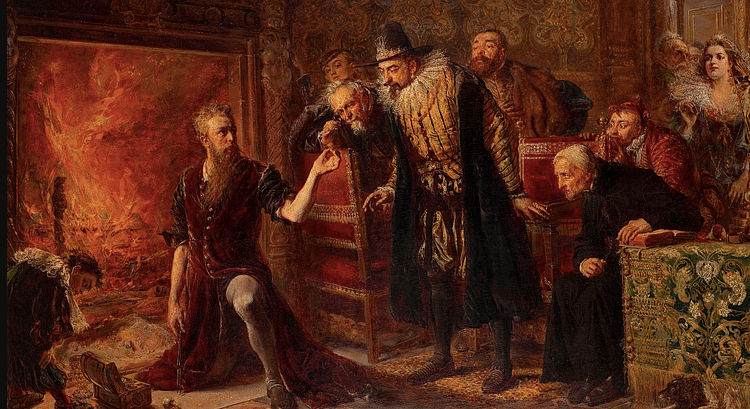
In a narrow sense, the AI neolab has something of the old alchemist’s workshop. Not the mysticism, but the structure: expensive instruments, secret recipes, patronage, failed experiments, and the hope that enough attempts will reveal a method the powerful cannot afford to leave outside.
Tracing back to as early as Greco-Roman Egypt, alchemists sought to transform matter and uncover hidden laws of nature. The field attracted frauds, but also produced serious experimenters such as Paracelsus and Jan Baptist van Helmont, whose work helped lay the groundwork for chemistry and medicine. And, as the powerful institutions of their time, rulers gathered alchemists around their palaces not because they knew which experiment would work, but because they wanted access to the people who might discover something valuable.
Today’s workshops have GPUs instead of furnaces and model weights and reinforcement learning techniques instead of alchemical recipes. Around them gather venture capital, cloud providers, and Big Tech platforms, not monarchs and nobles. But the old logic remains:
The palace doesn’t always know which experiment will matter.
It only knows that it wants the people who might find out.
Top News
Blackstone acquired a majority stake in Skroutz
The world’s largest alternative asset manager, Blackstone, acquired a majority stake in Greece’s leading e-commerce platform. Apart from the private equity fund CVC Capital Partners, which is divesting its position in the company, Skroutz’s founders are set to divest a portion of their shareholding while retaining a stake and continuing to lead the business. George Hadjigeorgiou is remaining as CEO. According to Reuters, the deal values the Greek company at about €635M.
London Greeks In Tech on June 11
Come join us for a Greeks In Tech event in Central London, right near Farringdon Station, on June 11. You can RSVP here.
Train your own LLM from scratch
A hands-on workshop from Angelos Perivolaropoulos at ElevenLabs, explaining how to train a language model locally yourself, with a practical focus on the tooling, constraints, and engineering tradeoffs. Links from YouTube and GitHub.
Summer Founders Program by BuildAthens
A founders program running July 1 – September 30 in Athens and organised by Achilleas Mitrotasios and Thomas Kosmas, offering $20K in funding, office hours and support, dinners with founders, and intros to investors. You can apply by May 31.
Jobs
Check out hundreds of job openings here from startups hiring in Greece.
Fundings
AI-powered primary care doctor Clara raised $12M Pre-seed led by YCombinator and A.Capital.
Neurosoft Bioelectronics raised $7.5M Seed led by Skybound to develop brain-computer interface technology.
Cancer diagnostics company Imagenomix secured $3.2M in Seed funding led by Modi Ventures, with participation from Metavallon VC.
Agentic cybersecurity Hoplon raised $1M Seed led by Haatch and Genesis Ventures.
Neptune Zero announced a €500K round led by Corallia Ventures for compliance and decarbonisation in marine operations.
E-mobility startup FlexThis raised €150K by Investing for Purpose.
AMCO raised funding from Halcyon Equity Partners to develop technology in intelligent transport systems, micromobility, and smart cities.
Perceptual Robotics raised funding from Loggerhead Ventures and One Planet Capital for automated wind turbine inspections.
Healthcare companies Health4Crew and Puberry raised funding from Envolve.
Acquisitions
Leading Japanese semiconductor manufacturer Renesas Electronics acquired Patras-based Irida Labs, a company developing edge computer-vision software that transforms cameras into intelligent AIoT sensors.
New Funds
Skybound launched with $38M to back deep tech founders in Pre-Seed and Seed.
Starcinco is a new defence tech fund with €22M focusing on Greece, Cyprus, and Armenia.
That’s a wrap, thank you for reading! If you liked it, give it a ❤️ and share.
Alex